
VALORANT Deleted ACS and Replaced It With a 0-500 Impact Score
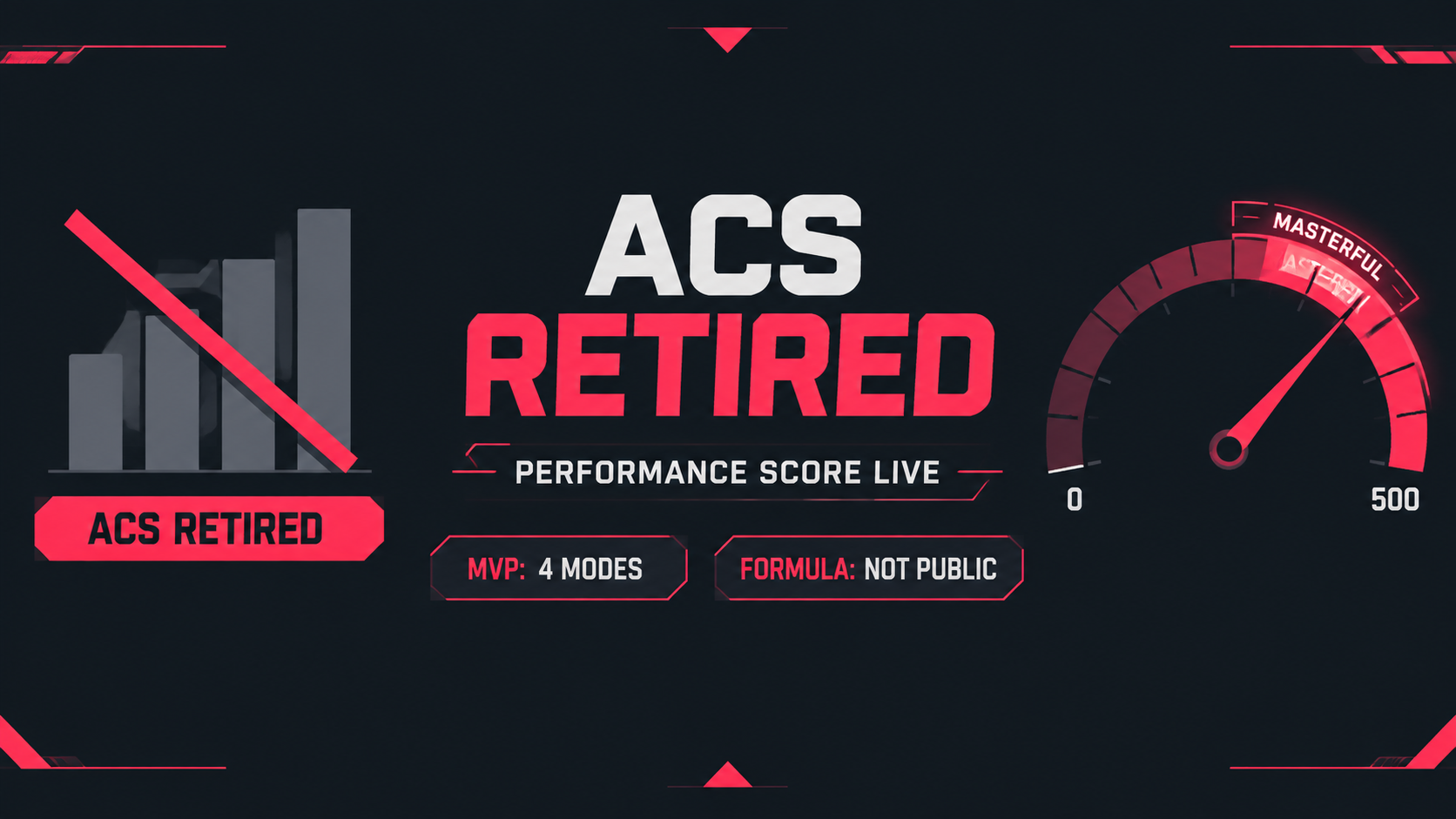
Patch 13.06 retired Average Combat Score on September 23 and handed MVP duty, scoreboard order and the post-match headline to a 0-500 Performance Score whose formula Riot has not published. We ran the question through our own 236-profile player database: only 98 carry a role tag at all, and that is the real problem with grading impact.
That last point is why this is a good moment to check what any single number can actually see - and we can check it against something concrete. Our player database keeps 236 professional and ex-professional profiles, and its role fields tell an uncomfortable story about impact that nobody has asked the formula yet.
What changed on September 23, under the hood
13.06 is Act 5's monster patch - the Warden rifle, the Gauntlet: Glitched mode and per-agent mastery progression all landed with it, and we have covered each (the Warden's Shanghai freeze). Buried under those headlines is the reworked end-of-game experience: the post-match screen now narrates your game instead of just filing it, with an expanded Accolades tracker hanging off the same system. The scoreboard's MVP star is no longer a community meme about whoever farmed the most final blows - in the four main modes it is an official output of the score.
Be precise about what did not change. Kills, damage, and ability usage still exist as raw numbers, and your career pages still log combat results; what died is ACS in its two jobs - headline column, and default tie-breaker for "who played well." If you are the player who screenshots scoreboards, the artifact you screenshot is now Riot's verdict about an entire job, not just the shooting part of it.
One more distinction the reaction threads kept missing on day one: the score does not touch rank. RR, matchmaking and hidden MMR run their own rails; nothing in the patch notes links the 0-500 rating to ladder placement. What it does touch is perception - the number your four teammates see first, and the number vote screens have quietly leaned on since 2020. Kick votes were never evidence-based. They just used to use a bad column as evidence. Riot also has not said whether ACS-style combat columns vanish from the scoreboard view entirely or merely stop driving the headline; both readings circulated on day one and neither has been corrected, which is the tell of a metric retired before its replacement was fully specified. Four matches in, the practical rule is to trust the raw numbers you can still see and treat the 0-500 like a weather forecast: directionally interesting, locally unreliable.
Why ACS was always duelist-flavored
ACS was built as weighted combat math - damage plus kills plus bonuses for multi-kills and long-range hits - and it behaved exactly like what it was. A Duelist dropping 24 always owned the column. A Controller who won the round with one well-timed smoke and 87 damage could not get out of the bottom half, and the game's most common lobby verdict, "he's feeding, look at his ACS," was literally true and completely meaningless at the same time. The community knew it. "ACS farming" entered the dictionary precisely because the metric rewarded winning the column while losing the round.
Riot's pitch for the Performance Score aims straight at that hole: a number that can credit the smoke, the trade, the flank lock, the entry who died so three others lived. Which is a genuinely better goal. It just inherits a harder one.
Our library's problem is bigger: roles dissolved first
Here is the exclusive look. We counted role tags across all 236 profiles in the database (first tag when two are listed; tally pulled 2026-09-24):
Read that however you like. The optimistic reading: ACS over-rewarded a visible 27-profile slice of the population, and a broader score could finally credit the other three-quarters. The harder reading: any 0-500 rubric has to score a player base whose single most common role answer is blank, with a formula nobody outside Riot can audit - while the agent roster still sorts 26 agents into a tidy 8/6/6/6 Duelist/Controller/Sentinel/Initiator grid that all balance work depends on. Riot needs roles. The pro population stopped behaving like them years ago, and a black-box impact score is where those two facts finally collide.
What the post-match screen gives you now
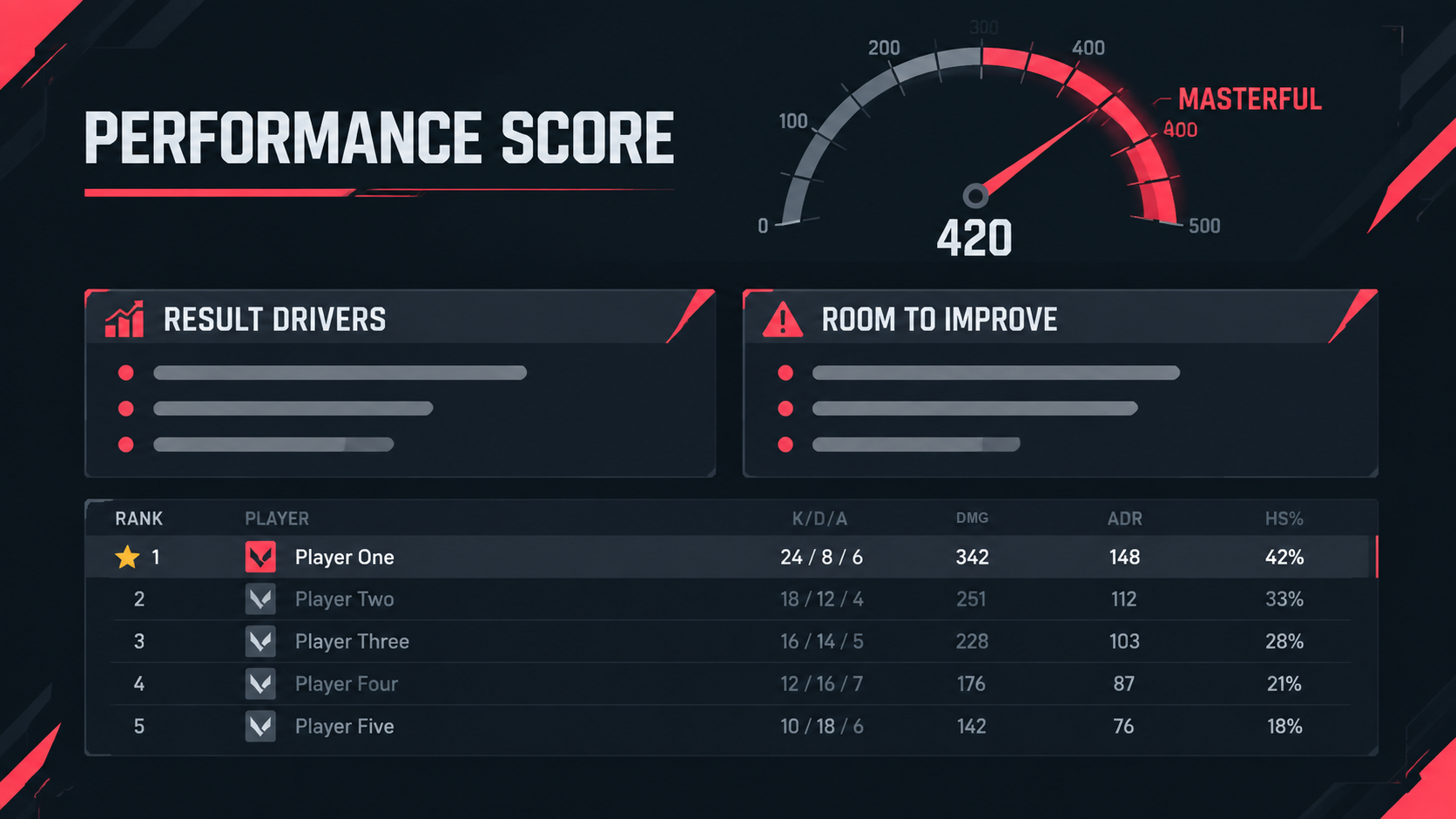
Practically, the summary is a paragraph instead of a column. Result drivers tell you what the score rewarded; improvement notes tell you what it punished; and because MVP and board order now follow the number in Competitive and Premier, an impact-heavy game on a controller can top the scoreboard without ever leading the kills column - if the model caught your round. Whether it catches yours is a fast experiment: play three games this Act where the combat stats looked ugly but the round outcomes felt good, and record your score each time. A handful of games will tell you which half of the weighting does the real work, long before Riot publishes it. And when the weights do surface, they will matter far beyond clip titles: agent tier lists, content-creator recommendations and Premier scouting all anchor to whatever number the client prints. There is a second audience deciding right now: broadcasts, overlay tools and third-party stat sites all have to choose within weeks whether their graphics keep printing combat columns or start printing the 0-500. Whichever they pick becomes the public vocabulary for what “a good game” means by Act 6 - and vocabulary set by a black box is vocabulary you cannot argue back against.
What to track while the formula stays closed
Until the weighting is public, treat the score as directional and keep the auditable numbers:
Before that future arrives, one more free experiment the score makes possible: log your rating alongside your damage-per-round every night this Act. If the correlation on your games sits far below what the community assumes, you have personally discovered which agents the model still reads as shooting statistics - information no tier list has until Riot opens the weights.
The honest bottom line nobody wants: ACS was a bad judge, but everyone had its measurements. The Performance Score may be a better one - Riot's own framing says it should be - but today it is unauditable, and "trust us, it captures impact" is an odd request from a game whose whole stats culture was built by people who wanted a number they could argue back.
So use the new paragraph as an index, not as evidence. Keep damage-per-round and duel wins as your receipts, screenshot the post-match screens while the model is young, and revisit the player database once Shanghai finishes - nearly half the Champions field is debutants whose old scoreboards never got them right either, and you will be reading about their impact scores from the other side of the screen very soon.